
Writing: The POWER Method
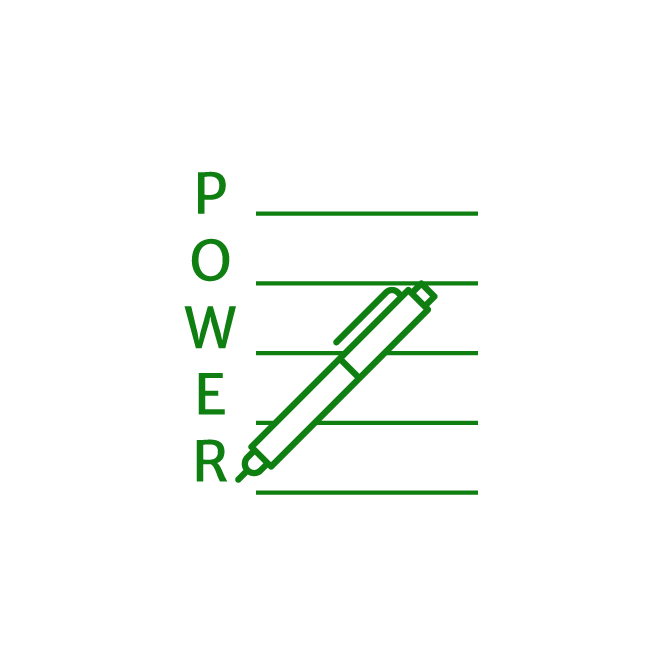
ALB Tutoring guides students’ writing process according to the POWER Method; it contributes to more efficient thought and effective writing. Middle school, high school, and college students learn to devise and stick to a plan which produces a more cohesive cognitive process and, ultimately, outcome.
This method focuses more on the process than on the outcome. It is in these steps where students learn how to foster, organize, and articulate their thoughts in support of an argument or idea.
What is the POWER Method?
P
PLAN: The most important step. Without thoughtful brainstorming and the creation of a roadmap, writing is exceptionally difficult. In this first step, students consider the topic and begin to free-write ideas. There are no rules (format, structure, or content); students just have to write. Gradually, they identify what they want to say (which will ultimately evolve into their thesis and supporting statements), and how they will achieve this.
O
ORGANIZE: After initial brainstorming, students interact with what they have written from an external perspective. They ask themselves, “what is the best way to present my topic or argument?” and “what is the logical flow of my thoughts in this reasoning?” Subsequently, students add structure to and visualize their writing come to life. They formulate their thesis statement, paragraph topics, topic sentences, and supporting details. Once this skeleton outline is ready, students add in this information.
W
WRITE: Time to transform and elaborate the detailed outline into paragraphs. Writing from a filled-in skeleton outline promotes and facilitates this step. Grammar, sentence construction, and flow are not yet imperative. Transferring thoughts to paper in a structured manner is the focus. As writer Patricia Hampl says, “a careful first draft is a failed first draft. I didn’t censor, I didn’t judge. I just kept moving. But I would not publish this piece in its present state” (Hampl, 2000).
E
EDIT: Editing and revising may seem like the same step, twice - however they are both distinct and essential. When editing, students reread their writing to clarify grammar, sentence structure, and flow. Editing means checking that the writing is comprehensible. This is crucial before proceeding to revising: ensuring that the writing makes sense.
R
REVISE: Now, the fun part! Revising is the complement to planning - the other most important step. This is when students' writing takes shape. Most of the significant content is already on paper, leaving room for change: relocating sentences and paragraphs, rephrasing lines, and adding and removing text. This is the true writer’s phase: an opportunity to follow the argument and mold it into a winning one. Referring back to Patricia Hampl, she says, “writing a first draft is like meeting someone for the first time. I come away with a wary acquaintanceship, but the real friendship (if any) is down the road. Intimacy with a piece of writing, as with a person, comes from paying attention to the revelations it is capable of giving” (Hampl, 2000). Revision allows this intimacy to unfold; the writing evolves into its true form, becoming something publishable, far from a draft.
Why use the POWER Method?
The POWER Method invokes cognitive processes. Each phase helps students break down and tackle feasible components of a comprehensive and, at times, overwhelming assignment. This timely planning and execution prevents last-minute scrambling and allows the student to work, pause, and return. When producing content, stepping away from it, and returning, students have new eyes and a fresh mind, spawning novel perspectives.* Printing out the writing to edit and revise it pen-in-hand engages additional senses (touch, visual) not invoked in the same way when working on the computer. Bonus points if the student reads the writing aloud to themself or a peer; this calls on the auditory sense.
Learning the POWER Method as a student is an invaluable tool for all of life’s writing. ALB Tutoring personalizes and adapts each step to students’ individual strengths and weaknesses, equipping them with the most beneficial tools possible. Students’ minds are powerful…even more so with the appropriate tools!
*Ernest Hemingway always called it a day when he still had more to write and say. This helped him pick up where he left off the next time he sat down to write. Yet, it also allowed his mind to involuntarily think and explore during the respite, providing new inspiration and ideas upon returning.
Contact ALB Tutoring to help your student learn better.
Englert, C. S., Raphael, T. E., Anderson, L. M., Anthony, H. M., Fear, K. L., & Gregg, S. L. (1988). A case for writing intervention: Strategies for writing informational text. Learning Disabilities Focus, 3(2), 98-113.
Hampl, Patricia (2000). I Could Tell You Stories. W.W. Norton & Company.
