
What is Executive Functioning?
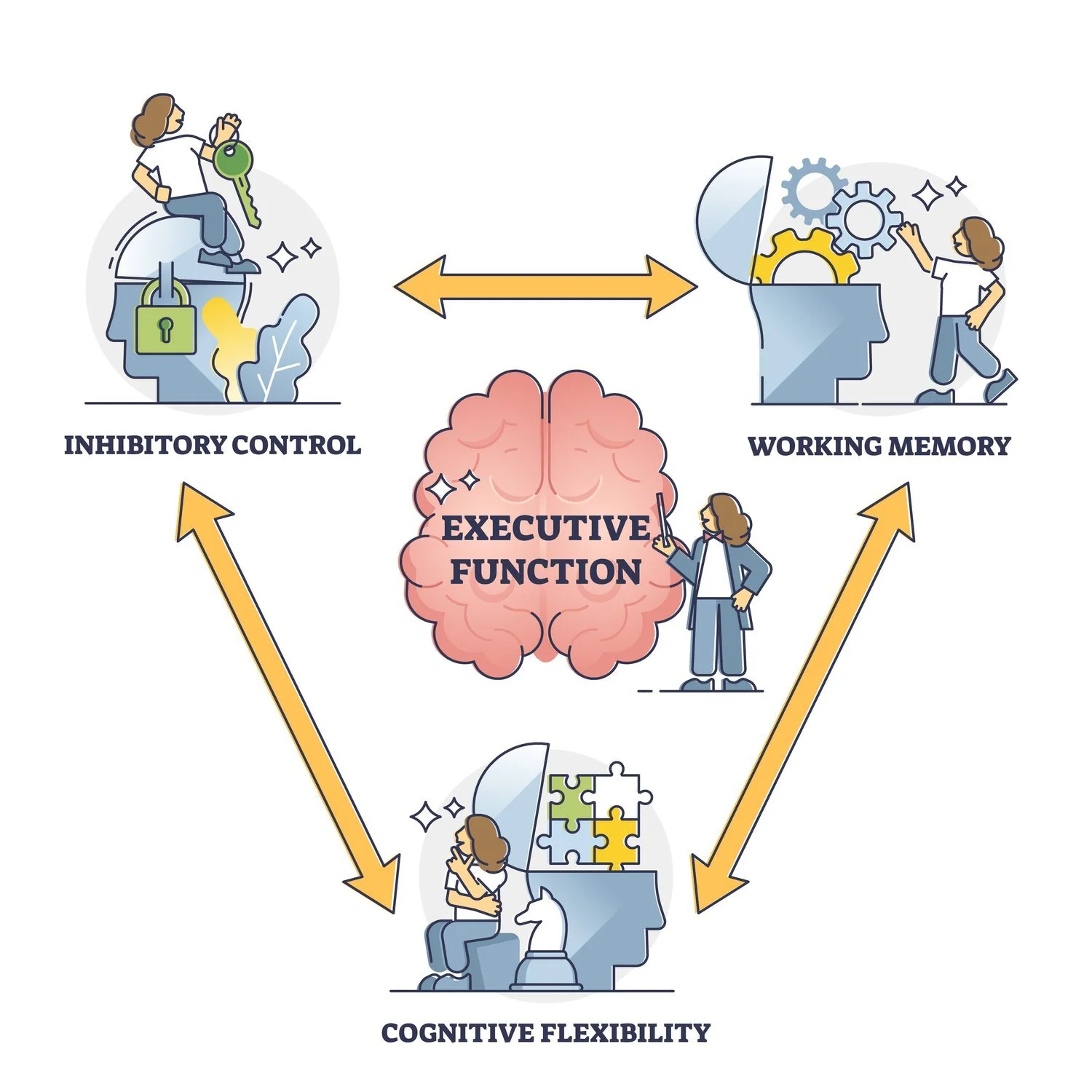
Executive functions consist of the brain mechanisms that plan tasks, focus attention, remember instructions, and juggle multiple items. One’s executive functioning is how well an individual can execute and coordinate these brain activities, seeing the concrete results in school, work, hobbies, and social relationships.
Harvard University’s Center on the Developing Child likens executive functions to the responsibilities of air traffic controllers: they have to efficiently and effectively coordinate the take-offs and landings of hundreds of aircrafts at a time. They also need to manage air traffic to avoid additional complications. Executive functions are they same: they help individuals filter distractions, prioritize tasks, set and achieve goals, and control impulses. The brain is capable of coordinating and managing these multiple, simultaneous demands, which inevitably contribute to productivity and help decrease overwhelming stress.
There are three cognitive elements that govern executive functioning: working memory, mental flexibility, and self-control.
Working memory: retaining and manipulating information over short periods of time
Mental flexibility: sustaining or shifting attention in response to various demands
Self-control: setting priorities and resisting impulsive actions or responses, especially in terms of distractions
Children and adolescents with weaker executive functions are often easily distracted, challenged by planning and initiating tasks, have difficulty remembering instructions, and struggle with working memory.
And yet, all individuals are born with potential to develop these skills, with develop being the key word. Not only does age (developmental level) affect one’s executive functioning - these skills develop rapidly in childhood and continue throughout adolescence - but training does too. These skills are like muscles that need to be strengthened; practicing them reinforces the neural connections, helping the brain organize and perform these simultaneous tasks. It is no wonder why an 18-year-old can better resist distractions than a seven year old. Not only are their intricate brains more developed, but their executive functioning is too.
Just as with any other skill in life, some people take longer to develop and strengthen their executive functioning. This is normal, especially due to brain constructions and past experiences. In fact, numerous experiences, like stress and trauma, can influence one’s executive functioning.
Regardless of a child or adolescent’s current executive functioning, they can always improve. ALB Tutoring helps children strengthen these neural muscles to stay more on task, plan more efficiently and effectively, understand and apply instructions, and remember via working memory.
Contact ALB Tutoring to help your student learn better.
